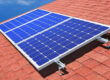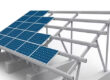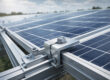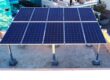


When it comes to rooftop or ground-mount solar installations, the solar panel mounting rail is a critical structural element that often goes unnoticed. This rail (sometimes called base rail, mounting beam, or profile) forms the backbone onto which solar modules are fixed via clamps or fasteners. A well-designed rail ensures proper alignment, adequate strength to withstand wind loads, thermal expansion, and mechanical stress, and helps in quick, precise installation. In essence, the mounting rails tie together the solar array, ensuring modules are uniformly spaced, well aligned, and securely fastened over time. SSP India manufactures high-quality aluminum mounting rails (for example, 50 × 50 mm sizes) that are engineered for durability, corrosion resistance, and ease of installation, catering to both standard and specialized solar mounting needs

Beyond just supporting panels, rails play multiple roles: they transfer loads (wind, snow, seismic) from the modules to the roof or ground structure, allow for expansion/contraction, and offer flexibility in clamping positions to optimize module arrangement. SSP’s rails are designed to integrate smoothly with clamps, strut channels, and brackets—so the full mounting system works as a coherent, robust unit. sspindia.in For roofs with challenging conditions—corrugated, tin-shed, curved or weak surfaces—SSP’s engineering ensures that the rails distribute the load evenly, reduce stress concentrations, and maintain elevation tolerances. In short, the right rail is what transforms a collection of solar panels into a stable, long-lasting solar array.
FAQs on Solar Panel Mounting Rails
What is a solar panel mounting rail?
It’s a structural beam or profile onto which solar panels are mounted using clamps or fasteners. It forms the skeleton of the solar mounting structure.
What materials are typically used for mounting rails?
Aluminum (especially 6000 series alloys like 6061) is very common due to its corrosion resistance, strength-to-weight ratio, and ease of machining. In some cases, coated steel or galvanized profiles might also be used.
What are the typical dimensions or profiles for rails?
Rails come in various cross-section dimensions (e.g. 50 × 50 mm, micro-rails, base rails) depending on span, load, and spacing requirements. SSP India, for example, offers a 50 × 50 mm aluminum rail model.
How do rails contribute to structural safety of the array?
Rails carry and transmit wind, snow, and seismic loads from the panels to the mounting supports. Proper design ensures stresses remain within safe limits, avoiding bending, deflection, or fatigue damage over time.
Can rails be used on complex or unconventional roofs?
Yes — with proper design. Rails can be adapted in length, spacing, height adjustments, and integration with custom brackets to suit curved, sloped, tin-sheet, or asymmetrical roofs.
Why choose SSP India’s mounting rails?
Because SSP India offers precision-engineered rails with corrosion resistance, modular compatibility with clamps & accessories, and ability to support complex roof structures with strong, stable mounting solutions.