


The global shift toward renewable energy has positioned utility-scale solar projects at the forefront of the green revolution. A Ground Mounted Solar Structure serves as the backbone of these large-scale installations, providing the necessary stability, orientation, and durability required to support photovoltaic modules over their 25-year lifecycle. Unlike rooftop installations, ground-mounted systems offer the flexibility to optimize tilt angles and orientations, ensuring maximum energy harvest per square meter.
For EPC contractors and solar developers in India, choosing the right mounting solution is a critical engineering decision. These structures must withstand diverse topographical challenges—from the corrosive saline environments of coastal regions to the high-wind zones of open plains. By utilizing high-tensile materials and precision engineering, ground-mounted systems ensure that the solar investment remains protected against seismic activity and extreme weather, providing a reliable foundation for sustainable power generation.
What is a Ground Mounted Solar Structure?
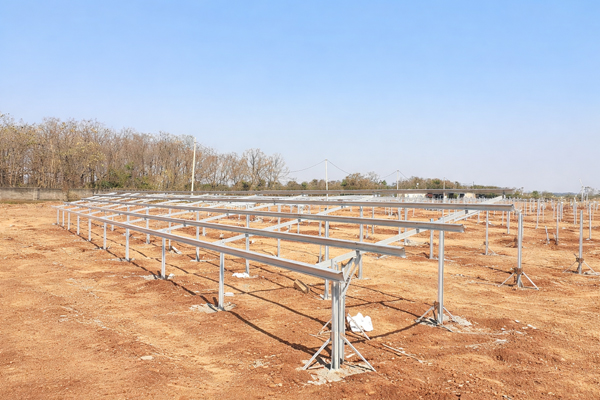
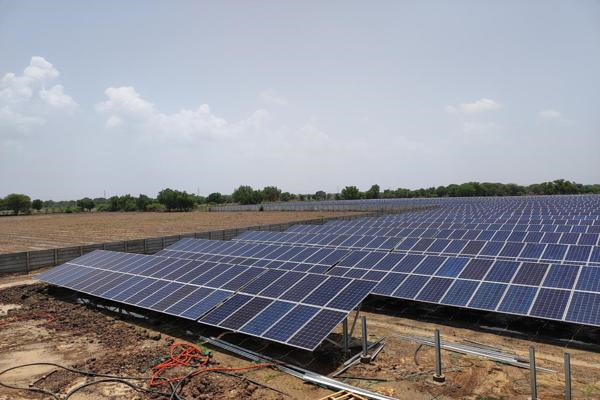
A ground-mounted solar structure is a specialized racking system designed to hold solar panels securely on the earth’s surface rather than on a building. These structures are engineered to lift the modules to a specific height and angle, facilitating optimal sun exposure throughout the day.
The working principle revolves around structural integrity and load distribution. The system transfers the weight of the panels and the dynamic loads (such as wind and snow) into the ground through a robust foundation. By decoupling the solar array from the building infrastructure, these systems allow for massive scaling, making them the standard choice for independent power producers (IPPs) and industrial captive power plants.
Types of Ground Mounted Solar Structures
To cater to varying geographic and budgetary requirements, we manufacture several configurations of mounting systems:
Fixed Tilt Ground Mount
The most common and cost-effective solution where the modules are set at a permanent, pre-calculated angle. This design is preferred for its low maintenance requirements and high structural rigidity.
Adjustable Tilt Structure
These structures allow for manual adjustment of the module angle. This flexibility enables operators to optimize performance based on the sun’s position during different times of the year, improving seasonal yield.
Seasonal Tilt Structure
A hybrid approach that allows for 2 to 4 manual adjustments per year. It bridges the gap between fixed-tilt and trackers, offering a performance boost without the complexity of motorized parts.
Tracker Compatible Structure
Engineered for integration with single-axis or dual-axis tracking systems. These structures are designed to handle the torsional loads generated by the movement of the array as it follows the sun’s trajectory.
Key Technical Features
Our engineering process focuses on durability and ease of deployment. Key features include:
Applications in the Indian Energy Landscape
Ground-mounted systems are versatile and essential for high-capacity energy requirements:
- Utility-Scale Solar Farms: The primary choice for multi-megawatt projects delivering power to the national grid.
- Industrial Captive Plants: Large manufacturing units utilize vacant land to offset high industrial electricity tariffs.
- Open Land Installations: Ideal for rocky or uneven terrains where rooftop space is unavailable or structurally insufficient.
- Government & Canal-Top Projects: Specialized structures for SECI, NTPC, and state-level renewable initiatives.
Advantages of Ground Mounted Solar Systems
- Optimized Performance: Unlike roofs, ground mounts can be oriented perfectly towards the true south with the ideal tilt angle.
- Enhanced Cooling: Increased airflow beneath the panels reduces the operating temperature, significantly improving cell efficiency.
- Ease of Maintenance: Ground-level access simplifies cleaning and electrical inspections, reducing O&M costs.
- Scalability: Systems can be expanded linearly as energy demands grow, without the constraints of roof area or load-bearing limits.
Why Choose SSP India for Ground Mounted Solar Structure
As a dedicated Solar Ground Mount Structure Manufacturer, SSP India combines local expertise with global engineering standards.
Installation Process Overview
The installation of a ground-mounted system is a systematic engineering process: