

Spring Nuts in Solar Panel Mounting Structures
A solar panel mounting structure may look simple from the outside, but it depends on many small components working together. Rails, channels, clamps, bolts, fasteners, and Spring Nuts all have a role in creating a properly assembled mounting system.
Among these components, the Spring Nut is small but important. It is commonly used with mounting channels to provide a practical fixing point for different components of the solar structure.
For solar installers, EPC companies, contractors, and project procurement teams, selecting the right Spring Nut is not just about finding the correct thread size. Material, dimensions, compatibility, environmental exposure, and project requirements should all be considered.
This guide explains why Spring Nuts are important in solar panel mounting structures and what to check before sourcing them for your next solar project.
What Is a Spring Nut?
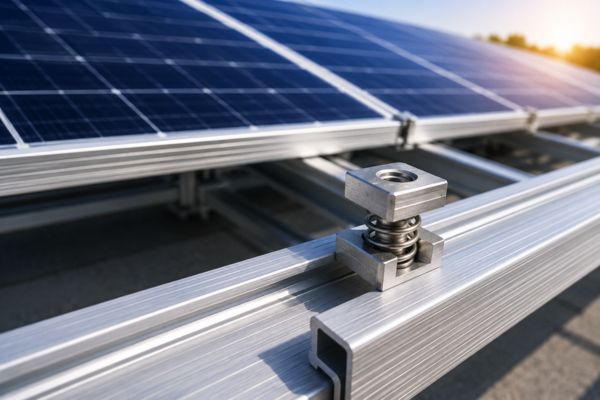
A Spring Nut is a fastening component designed to fit into compatible channels or mounting systems. The attached spring helps position and hold the nut within the channel during assembly.
Once correctly positioned, a bolt can be used with the Spring Nut to secure the required mounting component.
In solar panel mounting structures, Spring Nuts can be used with channels and other compatible mounting accessories to make installation more convenient.
The exact Spring Nut size, material, design, and application should always match the requirements of the mounting structure.
Why Are Spring Nuts Used in Solar Panel Mounting Structures?
Solar installations involve multiple components that need to be connected securely.
Spring Nuts provide a convenient fastening point inside compatible mounting channels. Their design can help installers position the nut where it is required before tightening the connected component.
Depending on the mounting system, Spring Nuts can offer advantages such as:
- Convenient positioning inside channels
- Secure fastening with compatible bolts
- Easier installation of mounting components
- Flexibility during assembly
- Compatibility with different solar mounting accessories
- Practical adjustment during installation
The main benefit is not simply the spring itself. It is the way the Spring Nut works as part of the complete channel and fastening system.
How Does a Spring Nut Work?
The working principle of a Spring Nut is relatively simple.
The nut is inserted into a compatible mounting channel. The spring helps maintain its position while the installer aligns the component that needs to be fixed.
A bolt is then inserted and tightened according to the mounting requirements.
This arrangement can make installation more convenient, particularly when several mounting points need to be positioned along a channel.
However, correct installation depends on using a Spring Nut that matches the channel, bolt, and other components.
Why Spring Nut Quality Matters in Solar Projects
Solar mounting structures are expected to remain in service for years. Many installations are continuously exposed to heat, rain, dust, humidity, and other outdoor conditions.
Although a Spring Nut is a small component, unsuitable material or incorrect sizing can create installation difficulties.
For this reason, project buyers should check the technical requirements rather than purchasing Spring Nuts only on the basis of appearance or price.
Quality considerations may include:
- Material
- Thread size
- Dimensions
- Surface finish
- Spring design
- Channel compatibility
- Bolt compatibility
- Manufacturing consistency
For large projects, consistency becomes particularly important because the same component may be required across hundreds or thousands of mounting points.
Choose the Right Spring Nut Material
Spring Nuts are available in different materials and finishes depending on their application.
For solar mounting requirements, options may include MS zinc-plated, SS304, and SS316
Spring Nuts.
Each option has different characteristics.
MS Zinc Plated Spring Nuts
Mild steel Spring Nuts with zinc plating can be used where the project specification calls for this material and finish.
The zinc-plated surface provides additional protection to the steel and gives the component a finished surface.
SS304 Spring Nuts
SS304 is a commonly used stainless steel grade. It offers corrosion resistance and is used in many industrial and outdoor applications.
SS316 Spring Nuts
SS316 stainless steel provides higher corrosion resistance in certain demanding environments and may be specified where the project conditions require it.
The right material should be selected according to the solar mounting design, environmental exposure, and project specification rather than assuming one material is suitable for every installation.
How to Select the Correct Spring Nut Size
Size is one of the most important factors when choosing a Spring Nut.
Spring Nuts are available in different thread sizes, and the correct size should match the bolt and mounting arrangement.
Depending on the product and project specification, common sizes can include:
- Material
- Thread size
- Dimensions
- Surface finish
- Spring design
- Channel compatibility
- Bolt compatibility
- Manufacturing consistency
Before ordering, confirm the thread size as well as the overall dimensions and channel compatibility.
For example, an M8 Spring Nut is intended for an M8-compatible fastening arrangement. However, thread size alone does not confirm that the component will fit every channel.
The complete specification should be checked before procurement.
Check Compatibility With the Mounting Channel
One common purchasing mistake is assuming that all Spring Nuts of the same thread size are identical.
They are not necessarily interchangeable.
The Spring Nut needs to fit the channel profile being used in the solar mounting system. Width, depth, nut dimensions, spring arrangement, and other design details can affect compatibility.
Before placing a bulk order, provide your Spring Nut Manufacturer with relevant specifications or drawings.
This can help ensure that the supplied component matches the intended mounting system.
Spring Nuts Help Make Solar Installation More Practical
Solar installation projects can involve a large number of repetitive mounting connections.
Installers need components that can be positioned correctly without making the assembly process unnecessarily complicated.
A compatible Spring Nut can help by remaining positioned within the mounting channel while the installer aligns and secures another component.
This can be particularly useful where mounting points need adjustment along a channel.
For large commercial and industrial solar installations, even small improvements in installation convenience can become important when repeated across many mounting points.
Spring Nuts for Rooftop Solar Mounting Systems
Rooftop solar installations require mounting components that work correctly with the selected structural system.
Depending on the design, Spring Nuts may be used with mounting channels to connect different components.
Before selecting Spring Nuts for rooftop solar projects, consider:
- Channel profile
- Bolt size
- Spring Nut dimensions
- Material specification
- Environmental exposure
- Mounting component compatibility
- Project engineering requirements
The Spring Nut should always be treated as part of the overall mounting arrangement rather than as an independent general-purpose fastener.
Spring Nuts for Commercial and Industrial Solar Projects
Commercial and industrial solar projects can require large quantities of mounting hardware.
Warehouses, factories, industrial sheds, commercial buildings, and other facilities may have extensive rooftop solar installations with many structural connection points.
For these projects, procurement teams should focus on consistency.
If Spring Nuts vary significantly in dimensions or thread quality, installers may face problems during assembly.
For bulk requirements, it is useful to confirm product specifications with the manufacturer before approving the complete quantity.
Common Mistakes When Buying Spring Nuts
Spring Nuts may appear simple, but incorrect selection can cause unnecessary installation problems.
Some common mistakes include:
- Selecting only according to price
- Ordering the wrong thread size
- Not checking channel compatibility
- Ignoring material requirements
- Assuming all M8 or M10 Spring Nuts are identical
- Not checking dimensions
- Ordering bulk quantity without verifying specifications
- Not considering outdoor exposure
- Failing to share project drawings when required
These issues can often be avoided by discussing the application clearly with the supplier before ordering.
What Should You Check Before Ordering Spring Nuts in Bulk?
Bulk procurement requires more attention than buying a few fasteners.
Before approving an order, check:
- Material grade
- Surface finish
- Thread size
- Nut dimensions
- Spring design
- Channel compatibility
- Bolt compatibility
- Required quantity
- Project application
- Packaging requirements
- Delivery schedule
How to Choose a Spring Nut Manufacturer
Choosing the right Spring Nut Manufacturer is important, especially when you need components in bulk for solar projects.
A manufacturer should be able to understand the required specifications and provide information about available materials, sizes, and configurations.
Before selecting a supplier, discuss:
- Available Spring Nut sizes
- Material options
- Surface finish
- Required quantity
- Solar mounting application
- Channel specifications
- Custom requirements, if any
- Production capacity
- Quality requirements
- Packaging and delivery
Spring Nut Manufacturer in Ahmedabad
Ahmedabad and Gujarat have a strong base of engineering, fabrication, fastener, and solar-related industries. This makes the region an important sourcing location for many solar EPC companies, installers, contractors, distributors, and project procurement teams.
For buyers searching for a Spring Nut Manufacturer in Ahmedabad, local sourcing can also make technical discussions, bulk-order coordination, and supply planning more convenient.
SSP India provides Spring Nuts as part of its solar mounting accessories range. Available options include MS zinc-plated, SS304, and SS316 materials with different size requirements for solar mounting applications.
Before placing an order, buyers should share their required material, size, quantity, and mounting specifications so the appropriate Spring Nut can be selected.
Why Small Components Matter in Solar Mounting Systems
Solar panels are the most visible part of a solar project, but they depend on an entire mounting system underneath.
A reliable mounting structure requires compatible components working together.
Spring Nuts, bolts, rails, channels, clamps, base plates, and other accessories all contribute to the assembly of the system.
This is why small components should not be selected casually.
Correct material, size, compatibility, and installation can be more important than the physical size or cost of the individual component.
Conclusion
Spring Nuts play an important role in solar panel mounting structures by providing practical fastening points within compatible mounting channels.
When selecting Spring Nuts, consider the material, thread size, dimensions, surface finish, channel compatibility, bolt requirements, and environmental conditions of the project.
For commercial and industrial solar installations, consistency is particularly important because large quantities of the same mounting component may be required.
If you are sourcing from a Spring Nut Manufacturer, provide complete technical requirements before placing a bulk order. The right Spring Nut should be selected as part of the complete solar mounting system rather than simply as a general fastener.
For solar projects in Ahmedabad, Gujarat, and other regions of India, choosing correctly specified mounting accessories can help make installation more practical and reduce avoidable compatibility problems at the project site.
Frequently Asked Questions
A Spring Nut is a fastening component designed to fit inside a compatible mounting channel. Its spring helps hold and position the nut while another component is secured using a bolt.
Spring Nuts can provide convenient fastening points inside solar mounting channels. They help installers position and secure compatible mounting components during assembly.
There is no single Spring Nut that is best for every solar project. The correct option depends on material, size, channel profile, bolt requirements, environmental exposure, and the approved mounting design.
Spring Nuts can be manufactured in different thread sizes, including commonly required sizes such as M6, M8, M10, M12, and M14. Availability and suitability should be confirmed with the manufacturer.
An M8 Spring Nut has an M8 threaded arrangement for use with compatible M8 fastening components. The nut dimensions and channel compatibility should also be checked before selection.
Both are stainless steel grades, but SS316 generally offers greater corrosion resistance in certain demanding environments. The appropriate grade should be selected according to the project’s environmental and engineering requirements.
Yes, Spring Nuts can be used in rooftop solar mounting systems where the mounting design includes compatible channels and fastening arrangements.
Check the material, thread size, nut dimensions, surface finish, spring design, bolt compatibility, channel profile, and project specifications before ordering.
Confirm material, size, dimensions, finish, channel compatibility, quantity, technical specifications, packaging, and delivery requirements. For large projects, product verification before bulk procurement can help prevent compatibility problems.
Ahmedabad has manufacturers and suppliers serving solar mounting and engineering industries. SSP India provides Spring Nuts for solar mounting applications in different materials and sizes for project requirements.