

Choosing Adhesive EPDM Rubber for a Better Solar Mounting Fit
Choosing adhesive EPDM rubber for solar mounting systems starts with checking where the rubber will sit and what it needs to do. The right strip or pad can provide a protective layer between compatible mounting parts and the roof surface. If you are looking for an adhesive EPDM rubber manufacturer and supplier in Ahmedabad, Gujarat, India, share your mounting design and site conditions before selecting a product.
A common mistake is buying rubber based only on its thickness or price. A strip may look suitable but still have the wrong width, adhesive backing, or compression level for the connection.
This guide explains what to check before buying, how to prepare the surface, and which mistakes can lead to poor results.
What Is Adhesive EPDM Rubber?
EPDM stands for ethylene propylene diene monomer. It is a synthetic rubber used in many outdoor sealing and protective applications.
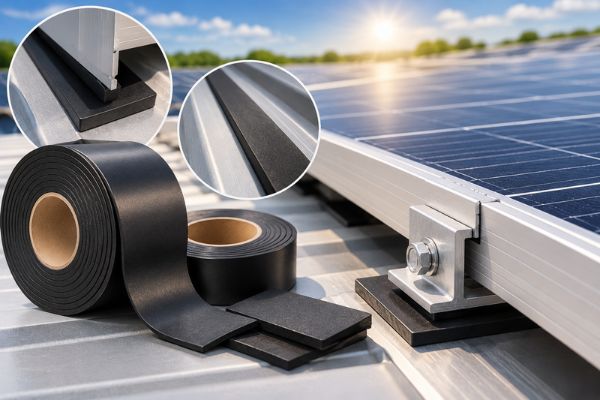
Adhesive EPDM rubber has a sticky backing covered by a release liner. The liner is removed before the rubber is placed on a suitable surface.
In a solar mounting assembly, the rubber may serve as:
- A protective layer between specified parts
- A cushioning pad beneath a compatible bracket
- A gasket within a designed sealing connection
- A separating layer that reduces direct contact between surfaces
The exact function depends on the mounting design. Adhesive EPDM rubber does not replace bolts, structural supports, or a complete roof waterproofing system.
Why Is Adhesive EPDM Rubber Used in Solar Mounting?
Solar mounting parts remain outdoors through rain, heat, dust, and changing temperatures. A suitable rubber pad can help manage contact between a bracket and the surface below it.
The adhesive backing also helps hold the pad in position during assembly. This can make fitting easier, especially when several brackets need consistent pad placement.
However, the adhesive should not be assumed to carry structural loads. The mounting system must use the approved mechanical connections.
Common Reasons for Using EPDM Pads
- To protect a surface from direct metal contact
- To keep a specified gasket in position during fitting
- To accommodate small surface differences within the design limits
- To provide compression within a compatible sealing assembly
A rubber pad can support a connection, but its performance depends on the whole assembly.
Start With the Mounting Location
Before comparing products, identify the exact place where the rubber will be installed.
Ask these questions:
- Will the rubber sit beneath a bracket, clamp, or rail?
- What roof material will it touch?
- Will it remain exposed to sunlight or sit beneath a component?
- Does the assembly need cushioning, surface protection, or sealing?
- Will the rubber be compressed after tightening?
These answers help narrow the selection.
For example, a flat strip placed under a bracket must match that bracket’s contact area. A gasket used around a roof penetration needs a sealing design that addresses the penetration itself. These are different requirements.
How to Choose the Right EPDM Rubber Thickness
Choose thickness according to the mounting design and required compression, rather than assuming thicker rubber will perform better.
A pad that is too thin may not provide the separation or compression the assembly needs. A pad that is too thick may affect bracket seating or allow unwanted movement.
Check the following points:
| Selection Point | Why It Matters |
|---|---|
| Gap between the parts | Helps determine the required pad thickness |
| Bracket contact area | Affects how pressure is spread across the rubber |
| Required compression | Helps the pad perform within the designed connection |
| Mounting instructions | May specify the exact thickness |
| Surface shape | Determines whether a flat pad can make suitable contact |
If a supplier suggests a different thickness, confirm that it is suitable for the mounting assembly before changing the specification.
Choose the Correct Width and Shape
A suitable thickness alone is not enough. The rubber must also fit the contact area.
A narrow strip may leave part of a bracket touching the roof directly. An oversized pad may extend beyond the intended area or interfere with drainage and fitting.
Before ordering, measure:
- Bracket base length and width
- Required strip width
- Hole positions, where relevant
- Roof profile beneath the bracket
- Any clearance needed around nearby parts
For repeated installations, accurately cut pads can help maintain a consistent fit. If you need custom shapes, provide a drawing with clear dimensions.
Check Whether the Rubber Is Solid or Sponge EPDM
Solid EPDM and sponge EPDM behave differently under pressure.
Solid rubber is generally denser. Sponge rubber contains a cellular structure and may compress more easily. Sponge products can also have different cell structures, which affect their suitability for sealing.
| Product Type | What to Confirm |
|---|---|
| Solid EPDM | Hardness, thickness, and compression behaviour |
| Sponge EPDM | Density, cell structure, and compression limits |
| Adhesive-backed EPDM | Adhesive suitability as well as rubber properties |
Avoid replacing one type with another simply because the dimensions are the same. Confirm which type the mounting system requires.
Check the Adhesive Backing and Surface Compatibility
The adhesive must suit the surface, installation conditions, and intended use.
A backing that bonds well to one material may perform differently on another. Roof coatings, textured surfaces, dust, moisture, and surface treatments can all affect adhesion.
Ask the supplier:
- Which surfaces is the adhesive designed for?
- What surface preparation is required?
- Is a primer needed?
- What application temperature range is recommended?
- Is there a waiting period before the assembly is put into service?
- Are there storage and shelf-life limits?
A small sample trial on the actual surface can help check handling and fit. It does not replace the product’s technical requirements or system approval.
Consider Outdoor Exposure at the Project Site
A solar project in Ahmedabad may face strong sunlight, heat, dust, and seasonal rain. A coastal project elsewhere in Gujarat may have different exposure conditions.
Discuss the actual location rather than ordering a general “outdoor rubber” product.
Important details include:
- Direct sunlight exposure
- Expected service temperatures
- Rain and moisture exposure
- Contact with cleaning products
- Nearby industrial chemicals or deposits
- Movement within the mounting connection
Ask for technical information covering the rubber and adhesive separately. A suitable rubber material can still give poor results if its adhesive backing is unsuitable.
Can Adhesive EPDM Rubber Prevent Roof Leakage?
Adhesive EPDM rubber can form part of a designed sealing assembly, but a self-adhesive strip alone does not guarantee a leak-free roof.
Roof leakage may come from fastener holes, damaged sheets, poor flashing, incorrect bracket placement, or an unsuitable sealing method.
A pad placed beneath a bracket does not automatically seal every path that water can follow.
For roof penetrations, use the mounting and roof manufacturer’s approved details. Check the required washers, gaskets, flashing, sealants, and tightening method as a complete system.
Common Selection and Installation Mistakes
Buying Without Measuring the Bracket
Guessing the pad size can lead to poor coverage or an awkward fit.
Better approach: Measure the contact area and confirm the required dimensions before ordering.
Choosing Rubber Only by Price
A cheaper strip may have a different material, adhesive, or thickness tolerance.
Better approach: Compare technical specifications and suitability before comparing cost.
Applying Rubber Over Dust or Moisture
A contaminated surface can weaken the adhesive bond.
Better approach: Prepare the surface according to the adhesive instructions and allow it to dry.
Stretching the Strip During Placement
Stretching can change the strip’s shape and leave uneven coverage.
Better approach: Position the rubber gently without pulling it into place.
Tightening Without Checking Compression
Too much pressure may damage or deform the pad. Too little may leave the assembly improperly seated.
Better approach: Follow the specified installation and tightening instructions.
Using Adhesive as the Main Fastening Method
The sticky backing may help with placement, but it is not automatically a structural fixing.
Better approach: Use the mounting system’s approved mechanical fasteners.
A Simple Adhesive EPDM Rubber Installation Checklist
Before installation:
- Confirm the approved rubber type and dimensions.
- Inspect the rubber and backing for damage.
- Check storage conditions and shelf life.
- Clean the contact surface using an approved method.
- Confirm that the surface is dry and ready for bonding.
During installation:
- Remove the release liner without contaminating the adhesive.
- Align the pad with the intended contact area.
- Apply pressure as directed by the supplier.
- Assemble the mounting parts using the approved method.
- Check that the pad has not shifted or folded.
After installation, inspect the completed connection. Record any product batch details needed for project maintenance.
What to Ask an Adhesive EPDM Rubber Manufacturer or Supplier
When contacting an adhesive EPDM rubber manufacturer in Ahmedabad or a supplier in Gujarat, provide enough detail to avoid guesswork.
| Information to Share | What It Helps Confirm |
|---|---|
| Mounting application | Intended function of the rubber |
| Roof and bracket material | Surface compatibility |
| Required dimensions | Thickness, width, and shape |
| Rubber type | Solid or sponge construction |
| Site location | Exposure conditions |
| Quantity | Order planning |
| Drawing or sample | Fit and hole positions |
| Required documents | Technical data and project records |
For bulk requirements across India, confirm the specification in writing. Where practical, review a sample before ordering the full quantity.
Discuss Your Solar Mounting Requirements With SSP India
If you are searching for an adhesive EPDM rubber manufacturer and supplier in Ahmedabad, Gujarat, India, share your requirements with SSP India.
Provide the bracket dimensions, roof material, required pad size, installation location, and quantity. Ask the team to confirm available options and provide the relevant product information.
Visit the Adhesive EPDM Rubber product page to enquire about a suitable option for your solar mounting assembly.
Frequently Asked Questions
Check the mounting design, rubber type, thickness, width, adhesive compatibility, and site conditions. Choose a product that matches the approved assembly requirements.
No. Excess thickness can affect bracket seating and compression. Use the thickness specified for the mounting connection.
It may be suitable for a compatible metal or coated surface, but preparation and adhesive requirements must be checked. Dust, moisture, and unsuitable coatings can affect bonding.
No. Its role depends on the assembly design. Some connections may require additional sealing components, flashing, or sealant.
Choose the type specified by the mounting system. Solid and sponge EPDM have different compression properties and should not be exchanged without checking suitability.
Ask the supplier about available cutting options. Share the required thickness, width, length, shape, hole positions, and quantity for confirmation.
Confirm the material, adhesive backing, dimensions, tolerances, shelf life, technical data, and compatibility with your mounting assembly. Review a sample where practical.
Conclusion
The right adhesive EPDM rubber should fit the mounting parts, suit the contact surface, and perform under the project’s conditions. Thickness and price are only part of the decision.
Measure the assembly, check the technical information, and follow the approved installation method. Clear specifications help buyers and suppliers select a suitable product and reduce problems during fitting.